

Applications
The efficient utilization of water resources is critical across all industries.
Whether for residential use, industrial production, or agricultural irrigation, accurately measuring and monitoring water flow ensures resource conservation, reduces costs, and ensures compliance with relevant regulations.
This guide will explore the fundamental principles of water flow meters, explaining their purpose, types, benefits, and applications.
By the end of this article, you will have a clear understanding of how water flow meters work and know how to select the right flow meter to meet your specific needs.
What is a Water Flow Meter?
A water flow meter is a device used to measure the volume or mass of water flowing through a pipe or channel.
These meters are essential for tracking water consumption, detecting leaks, and ensuring the efficiency of water supply systems. Their precision and reliability make them indispensable across a wide range of sectors.
Key Industries Relying on Water Flow Meters
Residential and Commercial Water Supply
Local water utilities use flow meters to measure water consumption in homes and businesses, ensuring fair billing and efficient water distribution.
Industrial and Manufacturing Sectors
Factories, chemical plants, and power generation facilities require precise water flow measurement to maintain process efficiency, prevent waste, and comply with industry standards.
Agriculture and Irrigation Systems
Farmers and agricultural engineers use flow meters to optimize irrigation, ensuring crops receive the appropriate amount of water while preventing overuse.
Environmental and Wastewater Management
Water flow meters play a crucial role in wastewater treatment plants, helping to monitor discharge levels and ensure compliance with environmental regulations.
Types of Water Flow Meters
Water flow meters come in various designs, each suited to different applications and operating conditions. The selection of a flow meter depends on factors such as accuracy requirements, fluid characteristics, and installation constraints.
Below are the main types of water flow meters, along with their advantages and limitations.
Turbine Flow Meters
Turbine flow meters utilize a rotating turbine impeller to measure water flow velocity.
These meters are cost-effective and widely used in clean water applications. However, they require regular maintenance because debris and particulate matter can degrade their performance.
Positive Displacement Flow Meters
These meters measure fluid flow by capturing and releasing fixed volumes of liquid.
They offer high accuracy-even at low flow rates-but are susceptible to wear and tear, necessitating regular maintenance.
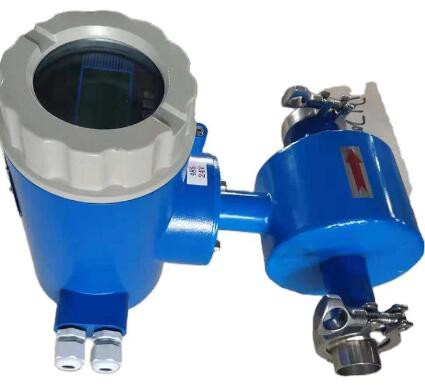
Electromagnetic Flow Meters
Also known as magmeters, these devices utilize electromagnetic fields to measure flow rates.
They offer high accuracy and are ideally suited for measuring conductive liquids, such as potable water and wastewater. However, they are relatively expensive and require an external power source to operate.
Ultrasonic Flow Meters
These meters measure the time required for ultrasonic pulses to travel upstream and downstream through the fluid.
They perform best with clean liquids; however, their accuracy may be compromised when measuring water containing entrained gas or particulate matter.
Vortex Flow Meters
Vortex flow meters detect the vortices (rotating patterns) generated by an obstruction placed within the fluid stream.
They are durable, require minimal maintenance, and are suitable for a wide range of applications. However, they may not be suitable for situations involving extremely low flow rates.