

Today, engineers prefer radar technology for bypass applications due to its superior performance. Traditional measurement methods cannot match the reliability of radar under demanding process conditions.
Maintaining Stable Readings Under Agitated or Foaming Conditions
Bypass chambers operate similarly to stilling wells. They create a calm measurement environment even when the main vessel experiences severe turbulence.
Radar level gauges provide accurate readings within these controlled spaces. The radar signal remains strong within the bypass chamber, maintaining stable measurements even with main vessel motion.
Radar's most impressive feature is its ability to handle foam. Guided Wave Radar (GWR) technology has a long and successful history of providing accurate level measurements in a wide range of foam conditions.
This is because the radar pulse interprets the foam layer as additional airspace, not liquid. The bypass chamber keeps the foam away from the measurement point, further improving measurement efficiency.
Heavy foam applications are best suited for guided wave radar using a single guided wave probe. These probes are "less susceptible to buildup than dual-waveguide or coaxial probes and are more resistant to coatings."
Unaffected by Temperature and Pressure Changes
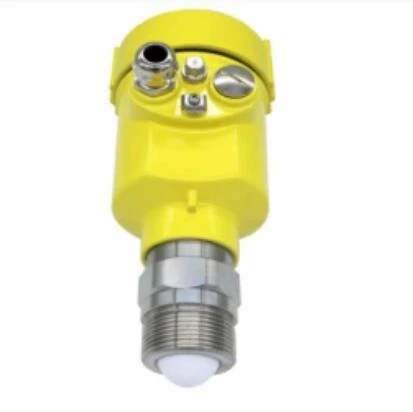
Radar's exceptional environmental adaptability sets it apart. While conventional sensors require recalibration when the environment changes, the Radar Type Level Gauge maintains accurate measurements regardless of temperature or pressure fluctuations.
This stability stems from the "extremely high measurement accuracy of radar level measurement," which is "unaffected by fluctuations in product characteristics and varying process conditions such as temperature, pressure, or strong dust." Radar sensors maintain their accuracy even in extreme environments up to 450°C/842°F.
The Radar Type Level Gauge can handle severe pressure fluctuations, "providing accurate measurements regardless of the environment," and "will not fail due to temperature, pressure, or specific gravity changes." Dedicated radar transmitters excel in "high-temperature and high-pressure applications," withstanding temperatures up to 200°C.
Lower Maintenance Costs
Radar's solid-state design offers the greatest operational advantage. Displacers and other conventional devices use mechanical components that are susceptible to wear and require frequent maintenance.
Guided wave radar has "no moving parts, which means reduced maintenance costs and improved measurement accuracy and reliability." Users can save costs because "pressure sensors, floats, and displacers all contain mechanical parts subject to wear, requiring additional maintenance and calibration."
Radar level measurement "requires no ongoing maintenance or recalibration." This makes Radar level gauges ideal for hazardous applications or hard-to-reach containers. The technology "requires less maintenance and has a longer service life than traditional measurement technologies, making it an affordable and accurate choice for level measurement."
Radar level gauges are also easy to install. Their "user-friendly adjustment feature saves time by eliminating the need to fill and empty the container." This simple setup process reduces the cost of ownership compared to mechanical sensors that require complex installation procedures.